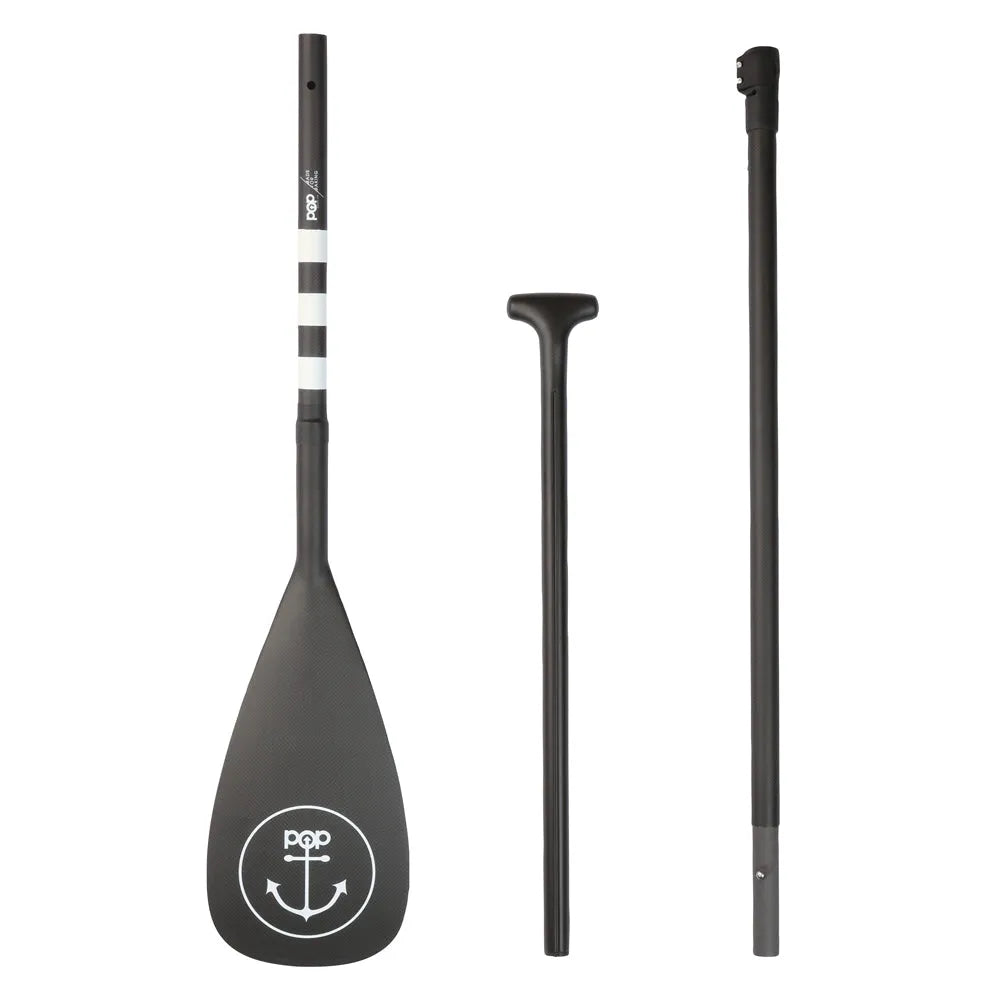
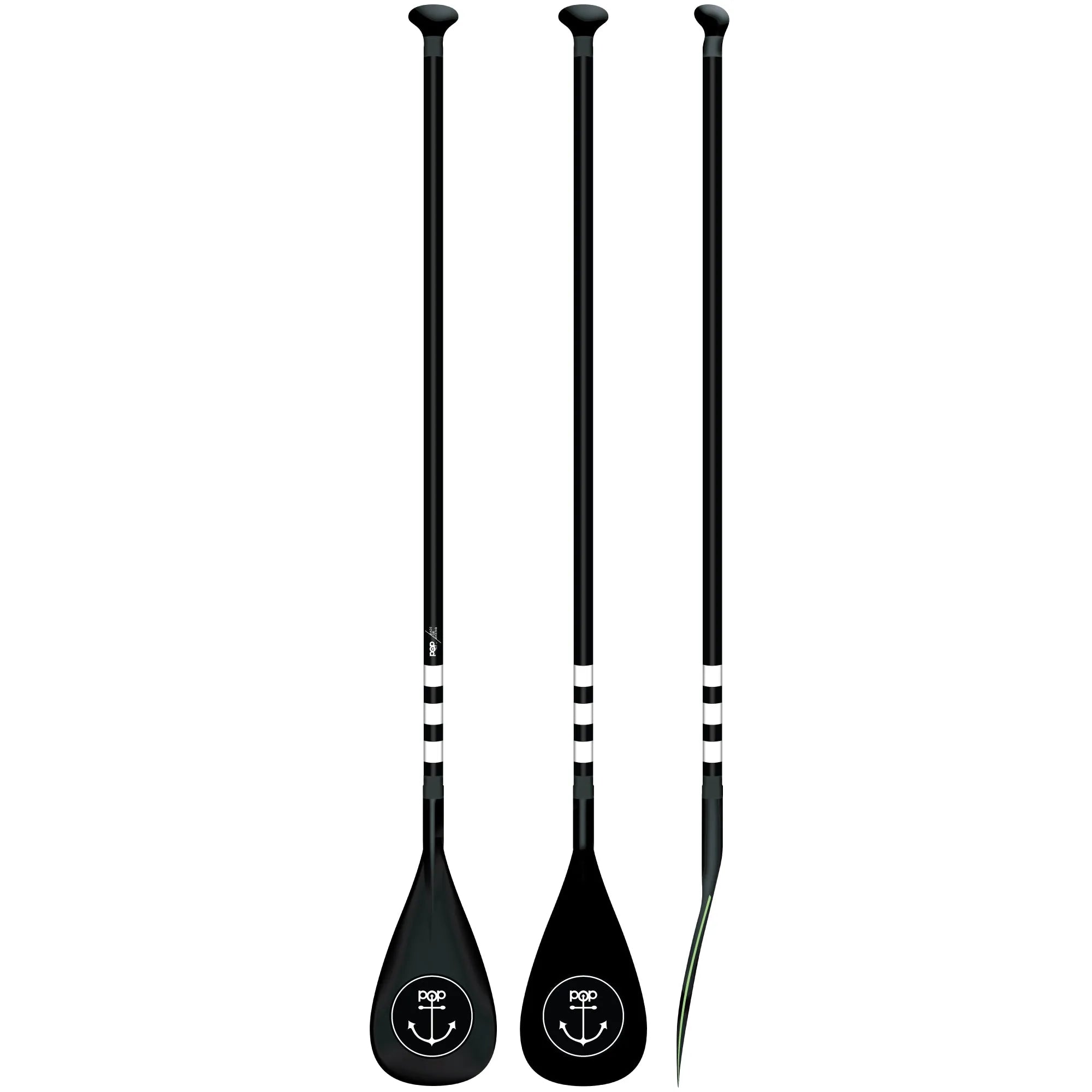
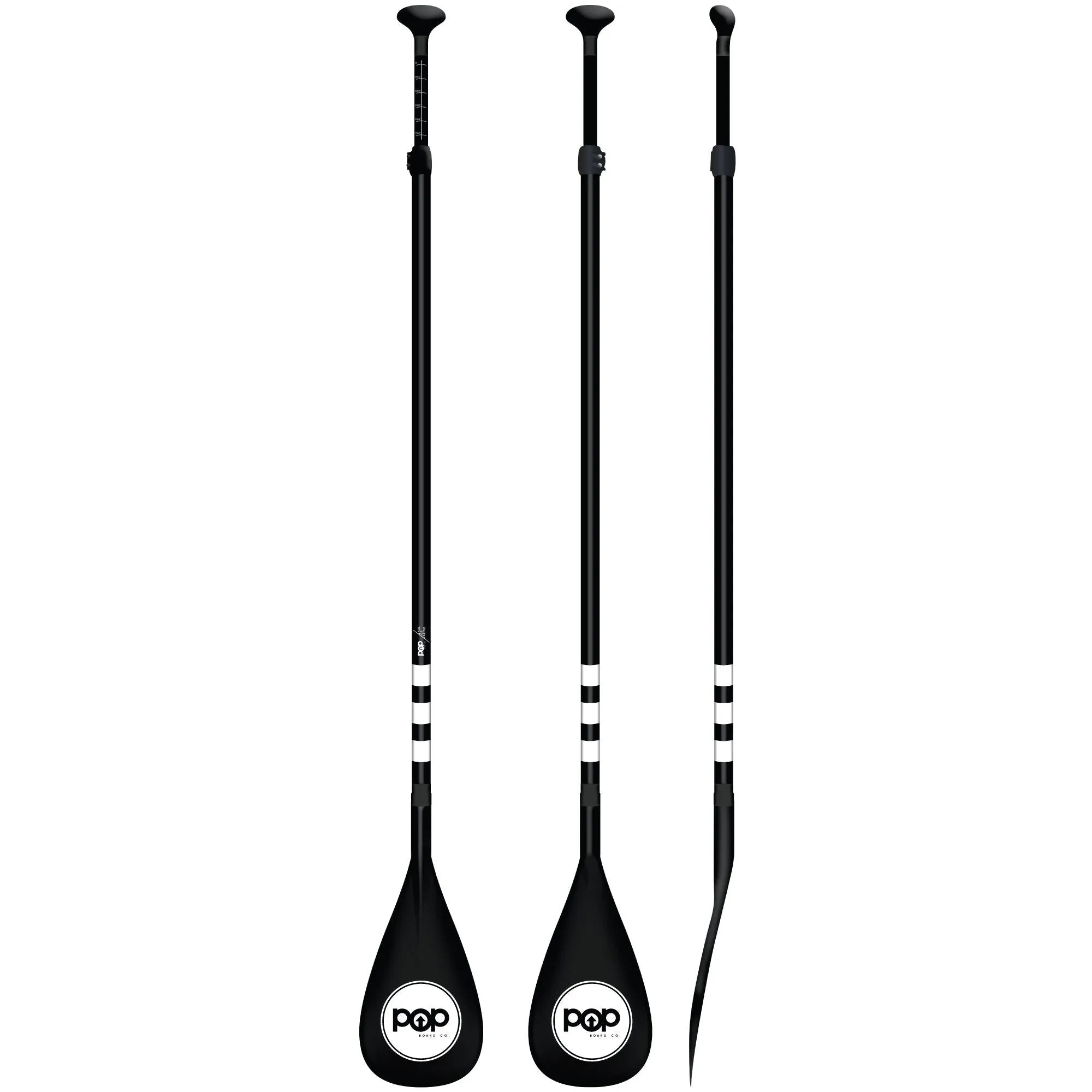
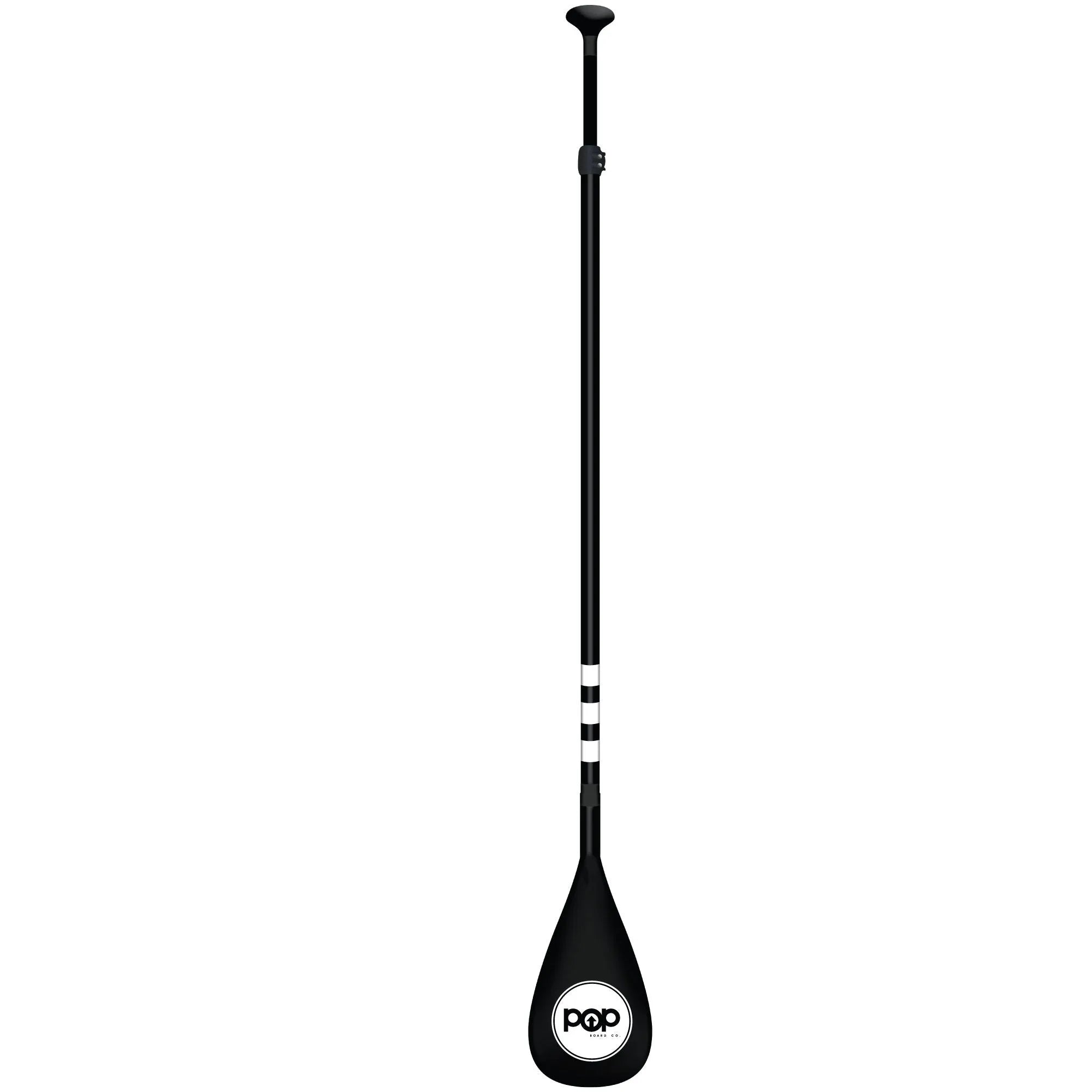
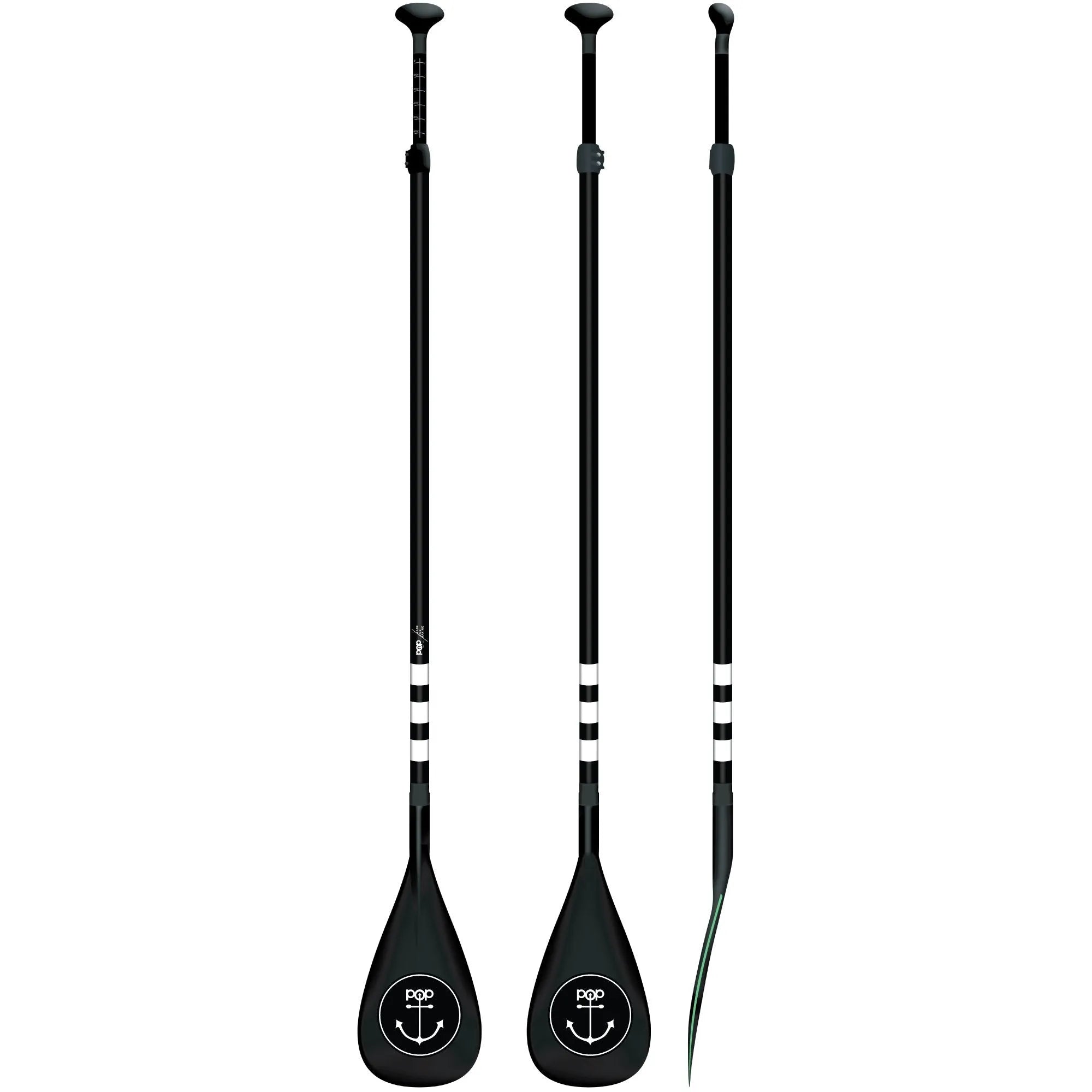
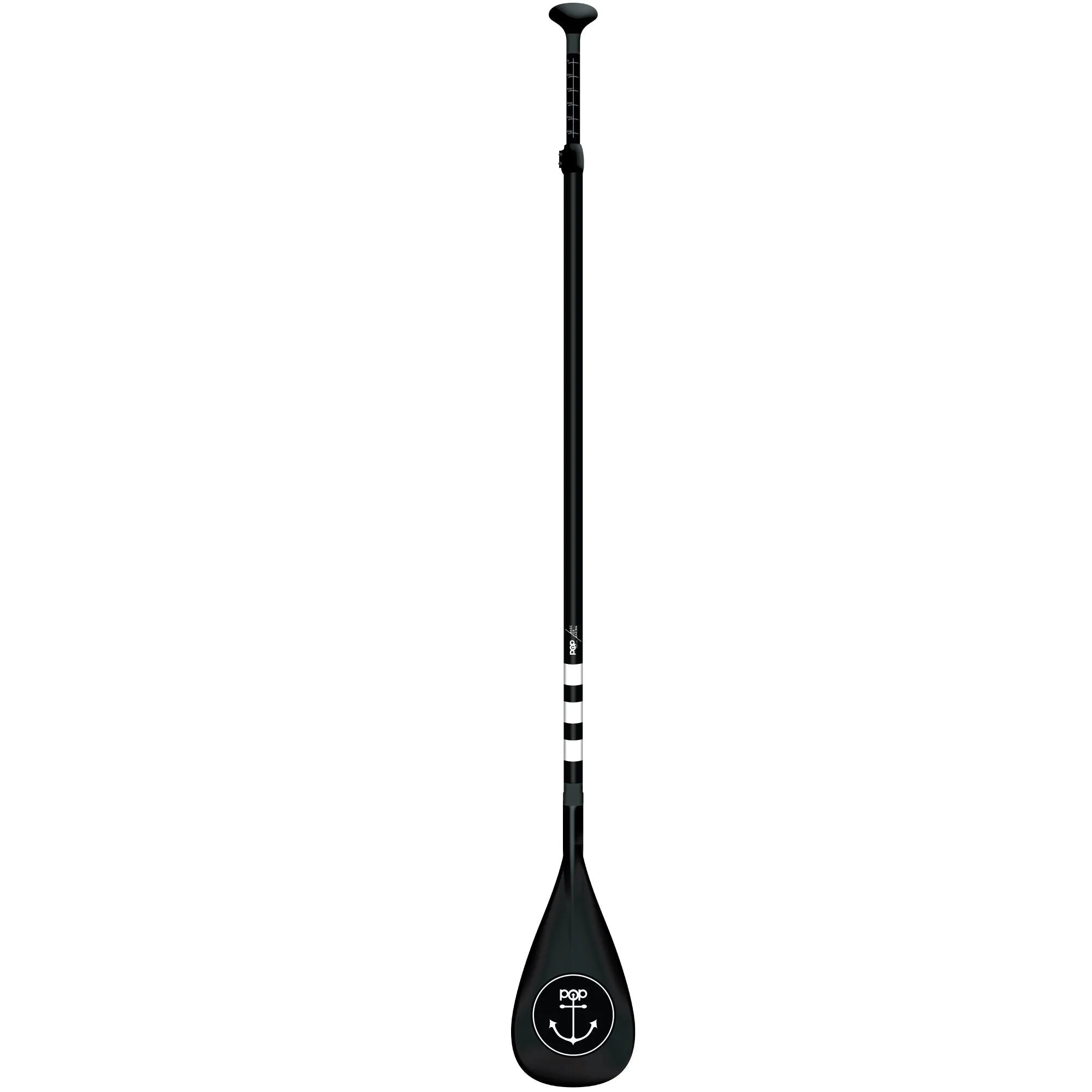
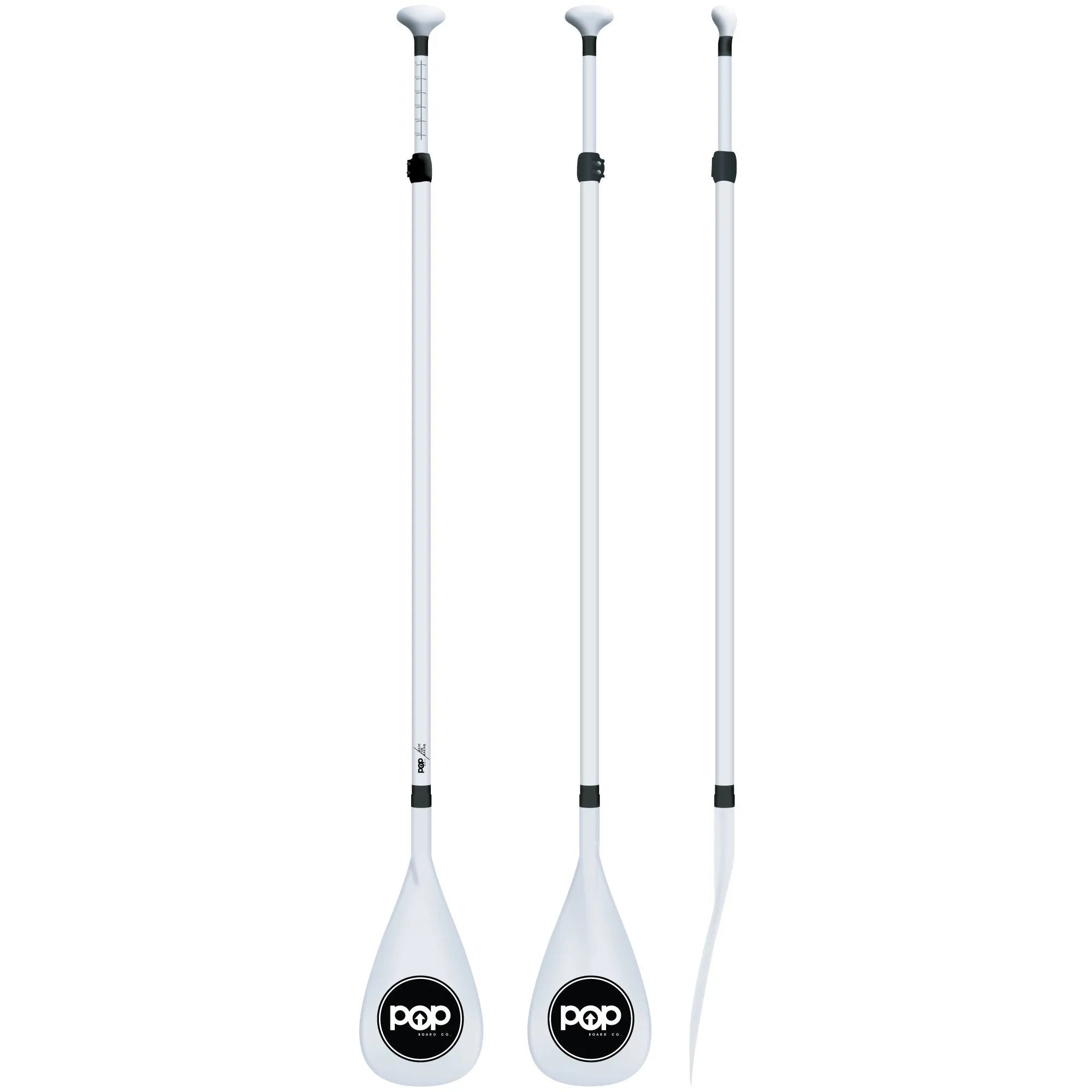
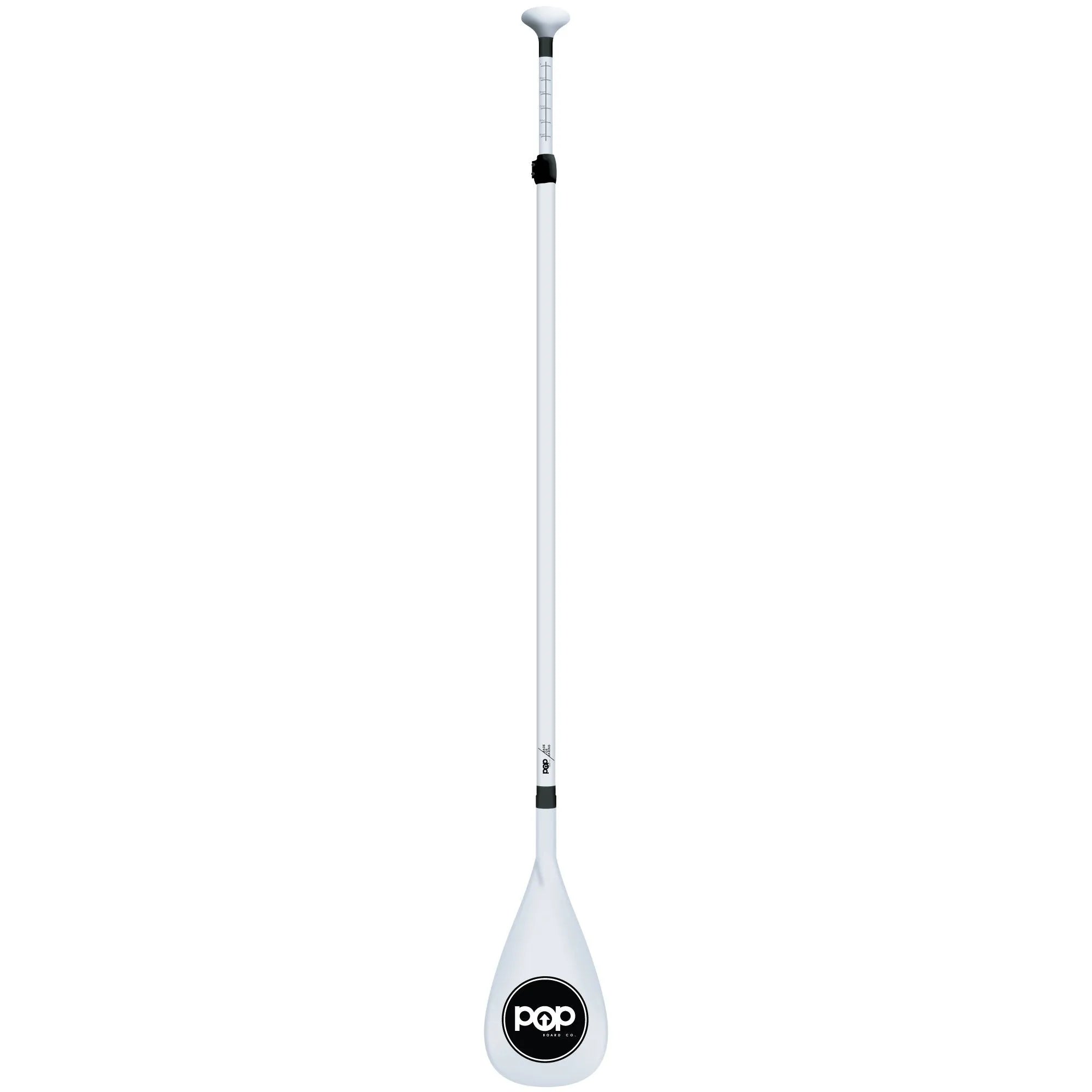
3pc Carbon Fiber Paddle
Lightweight carbon construction with a three-piece design that packs down much smaller than a full-length paddle.
A paddle seems simple until you spend a couple of hours swinging one. Weight, material, length and how it packs all change the way a paddle feels on the water.
POP has simple aluminum paddles for backups and guests, fiberglass for everyday paddling, and carbon fiber for paddlers who want less weight and a stiffer feel. Choose a one-piece, two-piece or three-piece design based on how you paddle and how much room you have to carry it.
You do not need the most expensive paddle in the rack. You need one that fits how often you paddle, how far you go, whether other people use your gear and whether the paddle has to fit inside a car or board bag.
An aluminum loaner paddle makes sense for guests, kids, rental use or keeping an extra paddle in the car.
Fiberglass takes some weight out of the paddle without stepping all the way into full-carbon pricing.
Less swing weight and a stiffer shaft can feel noticeably better once your paddles turn into longer sessions.
A three-piece paddle breaks down into shorter sections for board bags, trunks, closets and trips where storage matters.
Compare the paddles below for material, number of pieces, adjustability and current availability.
Some people need a paddle they can throw in the back of the car. Some want less weight on long paddles. Some already know exactly what they like and do not need anything adjustable. Here is the simple version.
Lightweight carbon construction with a three-piece design that packs down much smaller than a full-length paddle.
A fixed-length full-carbon paddle with no adjustment system or breakdown connection. It is the straightforward performance choice for paddlers who already know the length they want.
Aluminum shaft, plastic blade and an adjustable two-piece design. This is the one that makes sense as a spare, guest paddle or everyday no-stress option.
Full-carbon shaft and blade with adjustable length and a two-piece build. A good fit when you want carbon performance but still want the paddle to break down for storage.
A fiberglass shaft paired with a plastic blade. It gives paddlers a lighter shaft than the aluminum option without moving all the way into the carbon lineup.
You can move a paddle board with all three. The difference starts showing up in weight, feel and how much you care after the first half hour.
Aluminum is a solid choice for casual use, loaners and backups. It costs less and handles normal use well, but it is heavier than the fiberglass and carbon options.
Fiberglass cuts weight compared with aluminum without carrying the price of full carbon. It makes sense for somebody who paddles regularly but does not need the lightest option.
Carbon keeps weight down and gives the paddle a stiffer, more responsive feel. The difference becomes easier to appreciate as your sessions get longer.
Paddle weight feels different from board weight. You pick the board up once to carry it. The paddle moves with almost every stroke you make.
That is why a lighter paddle can become a much more noticeable upgrade for someone who paddles regularly or stays out for an hour or two at a time.
If most of your paddles are short trips around the cove, an affordable aluminum or fiberglass option may be all you need.
No ferrule, no breakdown point and no length adjustment. This makes the most sense when performance comes before compact storage and you already know the paddle length you want.
A good balance for everyday use. It breaks down for vehicles and closets while keeping fewer sections than a full travel paddle.
Built around portability. The shorter packed sections are easier to fit into an inflatable SUP bag, vehicle trunk or travel setup.
One of the big reasons people buy an inflatable paddle board is that the whole setup can pack down. A three-piece paddle keeps that same idea going.
It is easier to fit into an iSUP backpack, car trunk, RV, boat locker or closet without leaving a full-length paddle sticking out of everything.
If compact storage is not important, a two-piece or fixed paddle gives you other options.
Paddle length is personal, but an all-around SUP starting point is roughly 8 to 10 inches taller than the paddler. From there, adjust for your board, stance and the kind of paddling you do.
Recreational paddlers usually want enough length to stay upright and reach the water without overreaching every stroke.
If the paddle gets shared between family members or friends, adjustable length is much easier than trying to make one fixed size work for everybody.
A fixed paddle such as the Fixie cannot be adjusted later. Make sure the selected length fits you and the way you paddle.
Once you paddle regularly, changing the length by even a small amount can change your reach, cadence and comfort.
Current POP inflatable SUP packages include an adjustable paddle with the board. Buying another paddle makes the most sense when you want a spare, need a replacement or are ready for something lighter or better suited to the way you paddle.
Useful for group trips, lake houses, rentals and anyone who does not want one damaged paddle to end the day.
An inexpensive adjustable paddle is easier to hand to a friend than the carbon paddle you bought for yourself.
Moving from aluminum to fiberglass or carbon can make sense once paddling becomes more than an occasional afternoon.
A three-piece paddle is a useful option when you want the paddle packed alongside an inflatable board instead of carried separately.
Paddles are built to get wet. A few simple habits help keep the shaft, blade and adjustment points working the way they should.
Fresh water helps remove salt and grit from the shaft, blade and adjustment hardware.
Take multi-piece paddles apart after use so water and sand are not sitting inside the connections.
Pushing hard against rocks, sand and docks can damage blades that were designed to move water.
Make sure adjustable sections are seated and locked properly before you head away from shore.
It depends on how often you paddle and what matters most to you. Aluminum is affordable and practical, fiberglass offers a lighter middle ground, and carbon fiber reduces weight and gives the paddle a stiffer feel. Storage and travel also matter when choosing between one-piece, two-piece and three-piece paddles.
Carbon fiber can be a worthwhile upgrade for people who paddle regularly or spend more time on the water. Its lower weight and stiffness become more noticeable during longer sessions. Casual paddlers may be perfectly happy with aluminum or fiberglass.
Both are carbon-fiber options with adjustable length. The Ratchet is a two-piece full-carbon paddle, while the 3pc Carbon Fiber Paddle breaks into three sections and puts more emphasis on compact packing and travel.
The current Trooper Paddle uses a fiberglass shaft with a plastic blade. It is adjustable and breaks down into two pieces.
The two-piece Loaner uses an aluminum shaft and plastic blade. It is designed as an affordable option for casual paddling, guests, rentals and keeping an extra paddle around.
A fixed-length paddle does not telescope or adjust. POP's Fixie is a one-piece carbon paddle, so the length needs to be chosen correctly before purchase.
For general recreational SUP paddling, roughly 8 to 10 inches above the paddler's height is a useful starting point. Personal preference, board type and paddling style can change the ideal setting.
A three-piece paddle normally packs into shorter sections, which makes it easier to fit inside inflatable SUP bags and smaller vehicle or travel spaces. A two-piece paddle still breaks down but remains longer when packed.
Current POP inflatable paddle board packages include an adjustable paddle along with the board and other setup gear. The separate paddle collection is useful for replacements, backups and upgrades.
Yes, provided the adjustment range fits the paddlers. Adjustable paddles are useful for families, guests and shared equipment because the length can be changed between users.
Pick the weight, material and pack size that makes sense for the way you actually paddle.
Back to SUP Paddles