


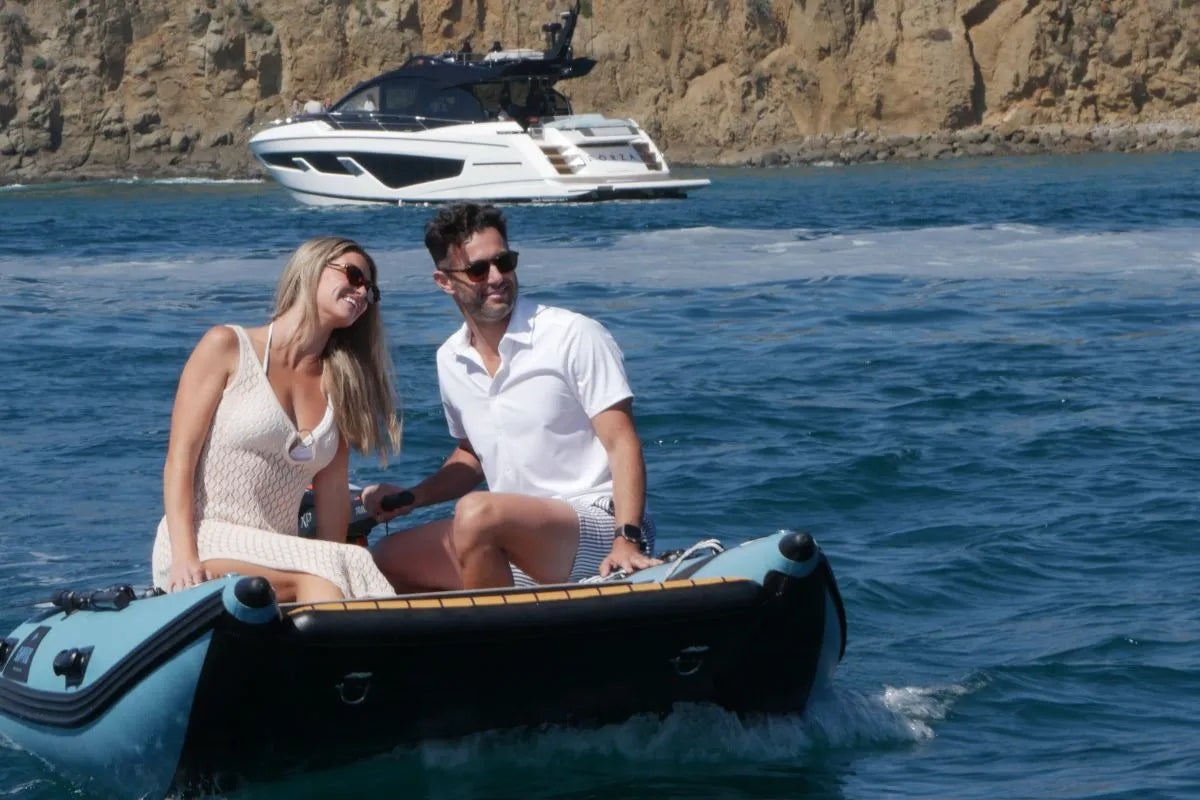
Inflatable does not mean flimsy. Build quality is the difference.
Inflatable boats carry the same reputation problem inflatable paddle boards used to have. People hear the word inflatable and picture something soft, temporary, or toy-like.
In reality, well-built inflatable boats are used as tenders, fishing platforms, dive boats, harbor runabouts, and family watercraft because their design can be stable, buoyant, portable, and practical when used within its ratings.
Multiple chambers, rated capacity, proper inflation, correct motor pairing, and smart operation matter more than the word inflatable.
Are inflatable boats safe?
Yes, a well-built inflatable boat can be safe, stable, and seaworthy for the conditions it is designed for. The key is buying a quality boat, staying inside the published ratings, inflating it correctly, matching the right motor, and carrying the proper safety equipment.
The same buoyancy that makes an inflatable boat float is one of its biggest safety advantages. Instead of relying on one hard shell, inflatable boats use air-filled tubes, often with multiple independent chambers. If one chamber is compromised, the remaining chambers can help keep the boat afloat long enough to respond safely.
That does not mean an inflatable boat is magic. No boat is safer than the way it is maintained and operated. Weather, loading, speed, motor choice, life jackets, operator judgment, and local rules all matter.
POP answer: Inflatable boats are safe when the boat is well-built, properly inflated, used within capacity, powered within rating, maintained correctly, and operated with the same seriousness as any other boat.
Why inflatable boats are genuinely stable
Inflatable tubes create buoyancy around the sides of the boat. That wide buoyant footprint helps the boat sit high, resist rolling, and feel forgiving when people move around, board from the water, load gear, or shift weight.
Catamaran-style inflatable boats take that idea further by spreading buoyancy across two tubes. The result is a wider, flatter, more level platform than many small single-hull inflatables. That is why inflatable catamarans can make sense for families, fishing, diving, tender use, and days where stability matters more than a narrow hull feel.
Wide tubes
Inflatable tubes add buoyancy and help create a stable stance on the water.
Multiple chambers
Independent chambers add redundancy if one section loses pressure or gets damaged.
Catamaran platform
Twin-hull layouts spread support across two sides, helping the deck feel flatter and more stable.
What to look for when buying an inflatable boat
The safest inflatable boat is not the one with the loudest sales copy. It is the one with clear specs, smart construction, real capacity ratings, and a design that matches your water.
Multiple air chambers
Redundancy is one of the core safety features. A boat with independent chambers gives you more margin if one chamber is damaged.
Published capacity
Look for clear passenger, weight, and motor ratings. Stay inside those numbers, especially when adding gear, fuel, coolers, dogs, and passengers.
Durable material and seams
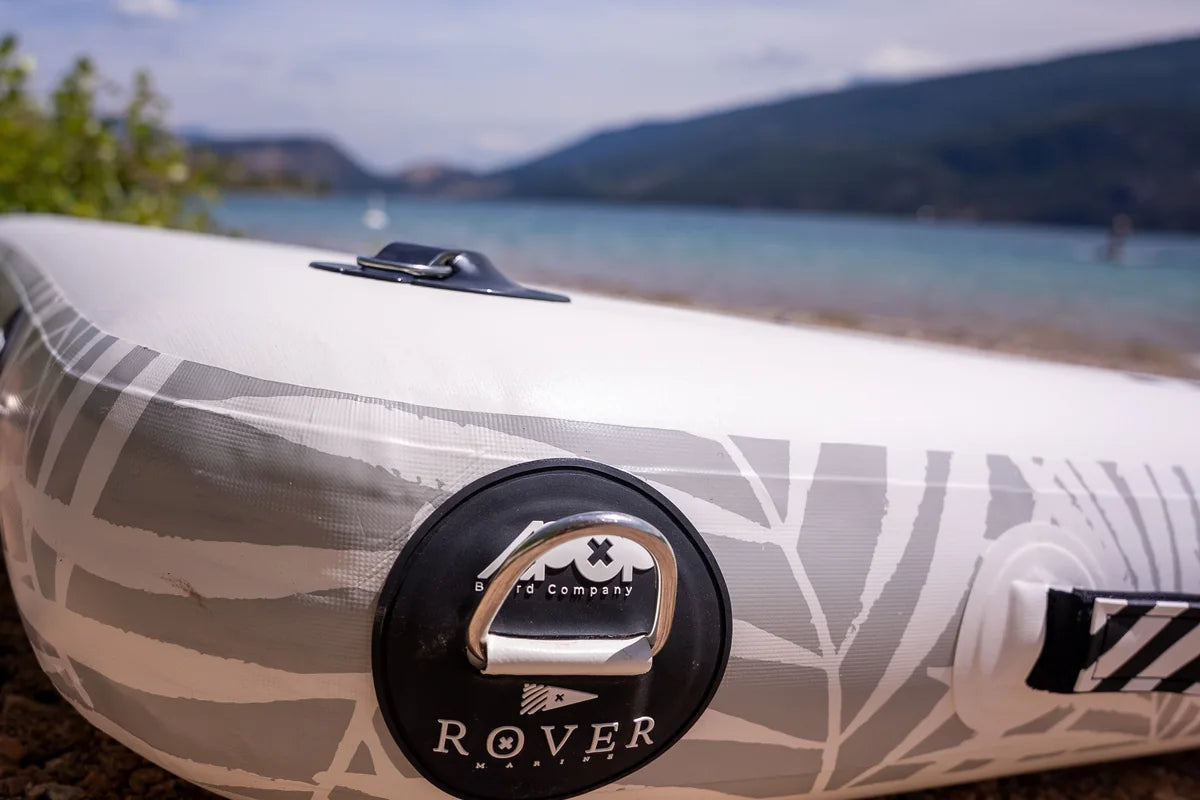
Tubes, seams, transom, floor, valves, and attachment points take the abuse. Quality construction matters.
Water-matched hull shape
Choose catamaran stability, single-hull maneuverability, or a tender layout based on your real use, not just the product photo.
Buyer tip: Before you buy, write down your normal load: people, gear, motor, battery or fuel, cooler, anchor, fishing gear, dive gear, and safety equipment. Then compare that real number to the boat capacity.
Battle Cat specs that matter
The Rover Marine Battle Cat lineup is built around inflatable catamaran stability, a reinforced high-pressure floor, wide stance, multiple chambers, and clear load ratings. The 10' and 12' models are the easiest starting points for most buyers comparing size, capacity, and motor power.
10' Rover Marine Battle Cat
12' Rover Marine Battle Cat
Important: Capacity includes more than people. Count passengers, motor, fuel or battery, anchor, cooler, fishing gear, safety equipment, and anything else coming aboard.
Inflatable catamaran vs single-hull inflatable
A catamaran-style inflatable boat spreads buoyancy across two tubes. That creates a wide stance and a flatter platform that resists side-to-side rocking. This is a real advantage for fishing, family outings, swimming, boarding from the water, and stepping in from a dock or larger boat.
A single-hull inflatable can still be a great choice when you want a more traditional tender feel, sharper maneuvering, or a different ride profile. The right answer depends on what you need the boat to do most often.
Choose a Battle Cat if...
You want more stability, a flatter deck feel, easier boarding, fishing confidence, family comfort, and a wide platform for gear.
Choose a Battle Boat if...
You prefer a traditional single-hull inflatable tender style with a different handling feel and a classic boat layout.
Safe operation still matters
No boat is safer than the way it is run. Carry properly fitting, Coast Guard approved life jackets for everyone aboard, follow federal and state equipment rules, check local requirements, and wear life jackets whenever conditions call for it.
Do not exceed the weight rating. Do not overpower the boat. Do not ignore weather. Do not run in conditions outside the boat’s intended use. Do not treat a portable inflatable as an excuse to skip basic boating safety.
Life jackets
Carry properly fitting, Coast Guard approved life jackets for every person aboard and follow child-wear rules in your state.
Weather check
Wind, current, chop, storms, tide, and temperature matter. If conditions look wrong, stay in.
Motor match
Use a motor that fits the boat’s rating. More power than the rating is not a safety upgrade.
Inflation and pressure are safety details
An inflatable boat should be inflated according to the manufacturer’s recommended pressures. Underinflation can make the boat feel soft, less responsive, and less stable. Overinflation can stress materials, especially in heat.
Battle Cat product pages list 3.5 PSI for the tubes and 10 PSI for the floor. Follow the numbers on your specific boat and check pressure when the temperature changes.
Check valve position
Make sure valves are closed correctly before launch and capped after inflation.
Watch heat
Air pressure can rise as the day gets hotter. Avoid leaving a fully inflated boat baking in extreme sun.
Inspect before launch
Look at tubes, seams, valves, transom, floor, D-rings, handles, and motor mount points before every trip.
Who an inflatable catamaran makes sense for
An inflatable catamaran is not just for one type of boater. The wide, portable platform can fit many different water days if you choose the right size and stay within the ratings.
Families
Stable deck, clear capacity, open layout, and easy boarding make catamarans comfortable for relaxed days on calm water.
Anglers
The wide stance helps when moving around, organizing gear, and using the boat as a fishing platform.
Yacht and sailboat owners
A portable inflatable tender can provide real utility without permanent trailer or slip logistics.
Divers and swimmers
An open, stable platform helps with water entry, re-entry, gear handling, and quick shoreline runs.
Lake houses and cottages
Packability makes storage easier when the season ends or dock space is limited.
Portable boat buyers
If you want more boat than a paddle craft but do not want a trailer, an inflatable catamaran is worth comparing.
Shop the Rover Marine boat lineup
Start with the size and use case. If stability is the priority, look at the Battle Cat. If you want to compare the whole lineup, browse the full boats and catamarans collection.
Best for compact catamaran stability
A 10 ft inflatable catamaran with 4-person rating, 1,000 lb capacity, up to 10HP, and a wide 5 ft platform.
Shop 10' Battle CatBest for more room and capacity
A larger 12 ft catamaran with 4-person rating, 1,200 lb capacity, up to 20HP, and a 5.5 ft width.
Shop 12' Battle CatCompare the full collection
Browse Battle Cats, Battle Boats, sizes, prices, and options in the inflatable boats and catamarans collection.
Shop BoatsThe bottom line
A well-built inflatable boat, used within its ratings and with proper safety gear, can be a safe, stable, and practical way to get on the water.
The design that makes it portable is also part of what makes it buoyant. Multiple chambers, wide tubes, clear capacity ratings, proper inflation, and smart operation are what separate a serious inflatable boat from something you should not trust.
Inflatable boat safety FAQs
Are inflatable boats safe?
Yes, well-built inflatable boats can be safe when properly inflated, maintained, loaded within capacity, powered within rating, and operated with proper safety equipment.
Why do inflatable boats have multiple air chambers?
Multiple air chambers add redundancy. If one chamber is damaged or loses pressure, the remaining chambers can help keep the boat afloat while you respond.
Is an inflatable catamaran more stable than a single-hull inflatable?
An inflatable catamaran usually feels more stable because the twin-hull layout spreads buoyancy across a wider platform and helps resist rocking.
What size motor should I use on an inflatable boat?
Use a motor that stays within the boat’s published rating. The 10' Battle Cat is rated up to 10HP, while the 12' Battle Cat is rated up to 20HP.
Do I need life jackets on an inflatable boat?
Yes. Carry properly fitting, Coast Guard approved life jackets for everyone aboard and follow federal, state, and local boating rules.
What should I inspect before using an inflatable boat?
Check air pressure, valves, seams, tubes, floor, transom, D-rings, handles, motor mount points, oars, safety gear, and weather before launch.
Want a safer buy? Start with the specs.
Compare size, capacity, chambers, motor rating, platform style, and real use before choosing your inflatable boat or catamaran.

Leave a comment
All comments are moderated before being published.
This site is protected by hCaptcha and the hCaptcha Privacy Policy and Terms of Service apply.